




Join the BP INDIA STUDENT CHALLENGE
Are you part of a team of enthusiastic, multidisciplinary students eager to test your knowledge and collaborative skills? Then the BP India Student Challenge is for you.
Organized by EAGE and hosted by BP, this student competition has become one of the most prominent initiatives within the academic community. Its main goal is to foster critical thinking, technical innovation, and teamwork through the analysis of real data and the resolution of challenges inspired by the future of energy exploration.
Teams are expected to demonstrate their ability to integrate disciplines, manage complex projects, and communicate results effectively. Each edition introduces new datasets and problem statements, challenging participants to explore creative and sustainable solutions.

Benefits for Participating Teams
- Compete for the winning trophy, which will be presented at an upcoming EAGE Conference in the Asia Pacific region. bp will cover reasonable travel expenses.
- Gain visibility among experts and leaders in the industry.
- Present your final report in front of a committee of experts from BP India.
- Acquire hands-on experience with real datasets from exploration projects.
How to Participate
Universities are invited to nominate multidisciplinary teams of 3 to 5 students, with the option to include one PhD student.
The competition consists of three elimination phases, each testing participants’ technical and communication skills.
To register, each team must submit an initial assignment based on a topic proposed by bp.
Applications are now closed for the bp India Student Challenge 2026. The final format (in-person or virtual) will be announced soon.
No Team Yet? We Can Help
If you would like to join the challenge but do not yet have a team, you can still participate. Simply register your details using the link here, and we will connect you with other interested students—potentially from different universities—so that you can form a team and submit your application together.
The deadline to register individually is 2 January. After this date, we will reach out to all registered students to help facilitate team formation.
2026 Challenge Theme
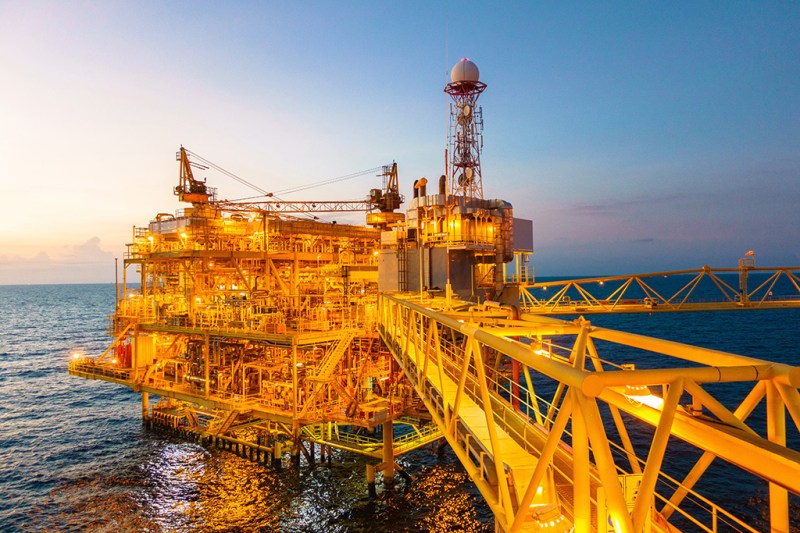
You are part of a multidisciplinary subsurface team working for an International energy company that manages an offshore oil field in the UK Continental Shelf (UKCS). The field, composed of turbidite sandstones, has been produced through waterflooding but is now experiencing a decline in oil output.
Your mission is to revitalize this mature asset by evaluating the potential of new infill drilling opportunities. You’ll need to assess the risks and uncertainties associated with these targets and design an optimized development plan to ensure the economic recovery of the remaining hydrocarbons.
The outcome of your work will be a presentation to the company’s executive board, where you will justify your proposal against other projects in the company’s global portfolio. To succeed, your team must integrate expertise in Geology, Geophysics, and Reservoir Engineering, complemented by strategic and economic insights to deliver a compelling and realistic plan.
You will receive a comprehensive data package including static and dynamic datasets — such as thickness and amplitude maps, 4D seismic data, and historical production information — to support your analysis.
Your first task is to persuade the board to allocate time for your team to evaluate the project by preparing and submitting a project proposal.
Competition Structure
The challenge is divided into three stages. In each round, the best-performing teams advance to the next phase, culminating in a final round where three university teams will present their solutions before a panel of industry experts at BP.
“Please find here the Rules and Procedures for the Challenge:”
is proudly hosted by BP.

Application Requirements
Before submitting their application, teams must carefully review the rules and guidelines, including those related to the use of artificial intelligence.
Applications must include:
- A signed Academic Integrity Statement. Please find the document at the following link: [click here].
- A Motivation Letter (maximum 2 pages) containing:
Team Introduction:
A brief presentation of the team members, their academic backgrounds, and shared interests.
Motivation to Participate:
The reasons why the team wishes to take part in the challenge.
Team Vision:
The team’s vision should emphasize the importance of maximising recovery & unlocking value through the application of technology. In order to achieve this goal you should set out your approach to the problem. How will you analyse the data, what products will you create and how will you present the different options available? Finally, you should consider how your approach fits with strategic approaches requiring efficient, sustainable and economically viable plans.
Applications for the bp India Student Challenge 2026 are now Closed!
Apply [here] and join the competition. We encourage teams to apply early to allow enough time for project preparation.
Selection Process

Phase One – Exploratory Challenge
Each team will receive a technical task provided by BP, focused on assessing the potential and feasibility of innovative methods for Recovery & Unlocking Value exploration.
At the end of this stage, the top 6 teams will advance to the next phase.
Phase Two – Technical Report and Video
Qualified teams must submit a 3-minute video and a technical report (up to 3,000 words) including figures and results that support their proposal.
Based on these submissions, the jury will select the three finalist teams.
Phase Three – Final Presentation
The three finalist teams will be invited to present their projects before a jury of 8–10 industry experts. This final phase will take place on June 7, 2026, at the bp India’s Technology Hub in Pune, providing students with the opportunity to demonstrate their talent, analytical skills, and creativity in front of leading professionals from the oil and gas sector.
| Selection Stages | Deadline |
|---|---|
| Application Opens | 27 Oct 2025 – 12 Jan 2026 |
| Team Selection (Initial Instructions) | 2 February 2026 |
| First Submission | 9 March 2026 |
| Selection of Teams for Round 2 | 30 March 2026 |
| Second Submission: | 26 April 2026 |
| Selection of Semi-Finalists Teams | 11 May 2026 |
| Finals (Format TBC) | 1 June 2026 |
FAQ
Who can participate?
Any student registered in Indian University can form teams of 3-5 participant. To succeed, it will be essential to have a petroleum engineer, a geologist, and a geophysicist in the team. At least one of the members should be a PhD Student. Please ensure that you have a diverse discipline team to succeed.
Are cross-university teams allowed?
Yes. We acknowledge not all universities have all necessary disciplines to form teams, so we strongly encourage to form cross-university teams to overcome this issue.
How many teams per university?
No limits for number of teams per university. However, a student cannot be part of more than one team.
Do we need to have a University EAGE chapter to participate?
Not necessary. Any student registered in an Indian University can participate.
Do we need to have an active EAGE membership to participate in the challenge?
No, you do not need to have an active membership to participate.
Is it mandatory to have a multi-disciplinary team?
While having a multi-disciplinary team is not strictly required, it is highly recommended and crucial for achieving success in this challenge. The oil and gas industry thrives on collaboration among experts from various fields—including petroleum engineering, geology, and geophysics—because complex challenges demand a variety of perspectives and specialized knowledge. Forming a team with diverse disciplines will strongly enhance your ability to address real-world problems effectively and maximize your chances of success.
FAQ
Who can participate?
Any student registered in Indian University can form teams of 3-5 participant. To succeed, it will be essential to have a petroleum engineer, a geologist, and a geophysicist in the team. At least one of the members should be a PhD Student. Please ensure that you have a diverse discipline team to succeed.
Are cross-university teams allowed?
Yes. We acknowledge not all universities have all necessary disciplines to form teams, so we strongly encourage to form cross-university teams to overcome this issue.
How many teams per university?
No limits for number of teams per university. However, a student cannot be part of more than one team.
Do we need to have a University EAGE chapter to participate?
Not necessary. Any student registered in an Indian University can participate.
Do we need to have an active EAGE membership to participate in the challenge?
No, you do not need to have an active membership to participate.
Is it mandatory to have a multi-disciplinary team?
While having a multi-disciplinary team is not strictly required, it is highly recommended and crucial for achieving success in this challenge. The oil and gas industry thrives on collaboration among experts from various fields—including petroleum engineering, geology, and geophysics—because complex challenges demand a variety of perspectives and specialized knowledge. Forming a team with diverse disciplines will strongly enhance your ability to address real-world problems effectively and maximize your chances of success.